
"The Scar Healed. So Why Does It Still Bother Me?"
If you have had a Caesarean section, you may have been told at your six-week check that your scar looks good. And it might well look fine from the outside. But that does not always tell the full story of what is happening beneath the surface, or how you feel about it.
Some people leave their postnatal appointments with no guidance at all on how to care for their scar. Others know they should be doing something but are not sure what, or when to start. And for some, the relationship with the scar is more complicated than that. A difficult birth experience, an emergency procedure, or simply the strangeness of a part of your body that feels numb, tight, or unfamiliar can make it hard to engage with the scar at all. Some people cannot touch it. Some avoid looking at it.
All of this is normal. And all of it is something that can be supported.
What is actually happening beneath the surface?
A Caesarean section passes through seven distinct layers of tissue: skin, subcutaneous fat, the fascia (connective tissue), the abdominal muscles, a second layer of fascia, the peritoneum (the lining of the abdominal cavity), and the uterus itself. It can take up to 2 years for the scar to reach full maturity, within this time frame, proliferation and remodelling of the tissue are still happening. So allow yourself time.
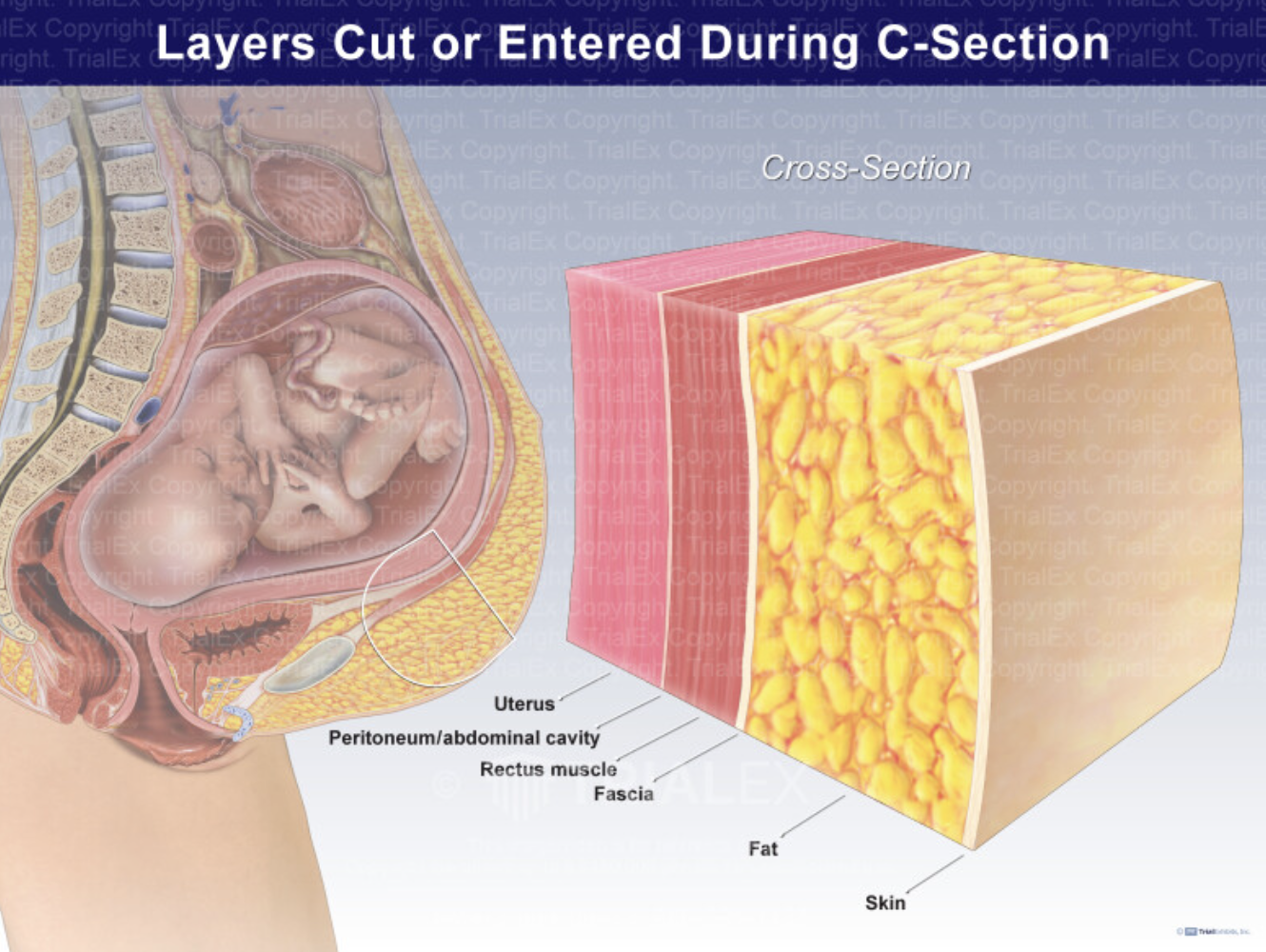
Image: Layers cut or entered during a C-section. Source: TrialQuest (trialquest.com)
When these layers heal, the body produces collagen to repair the wound. This new tissue is thicker and less organised than the tissue it replaces. In an ideal healing environment, the scar settles, softens, and becomes more flexible over time. But without active management, the scar tissue can bind to the layers beneath it, creating what are known as adhesions.
Adhesions are essentially areas where the scar tissue has "stuck" to underlying structures, including the fascia, the abdominal muscles, and sometimes deeper structures in the pelvis. This is not a complication in the dramatic sense; it is a very common outcome of any surgical healing process. But it can have real consequences.
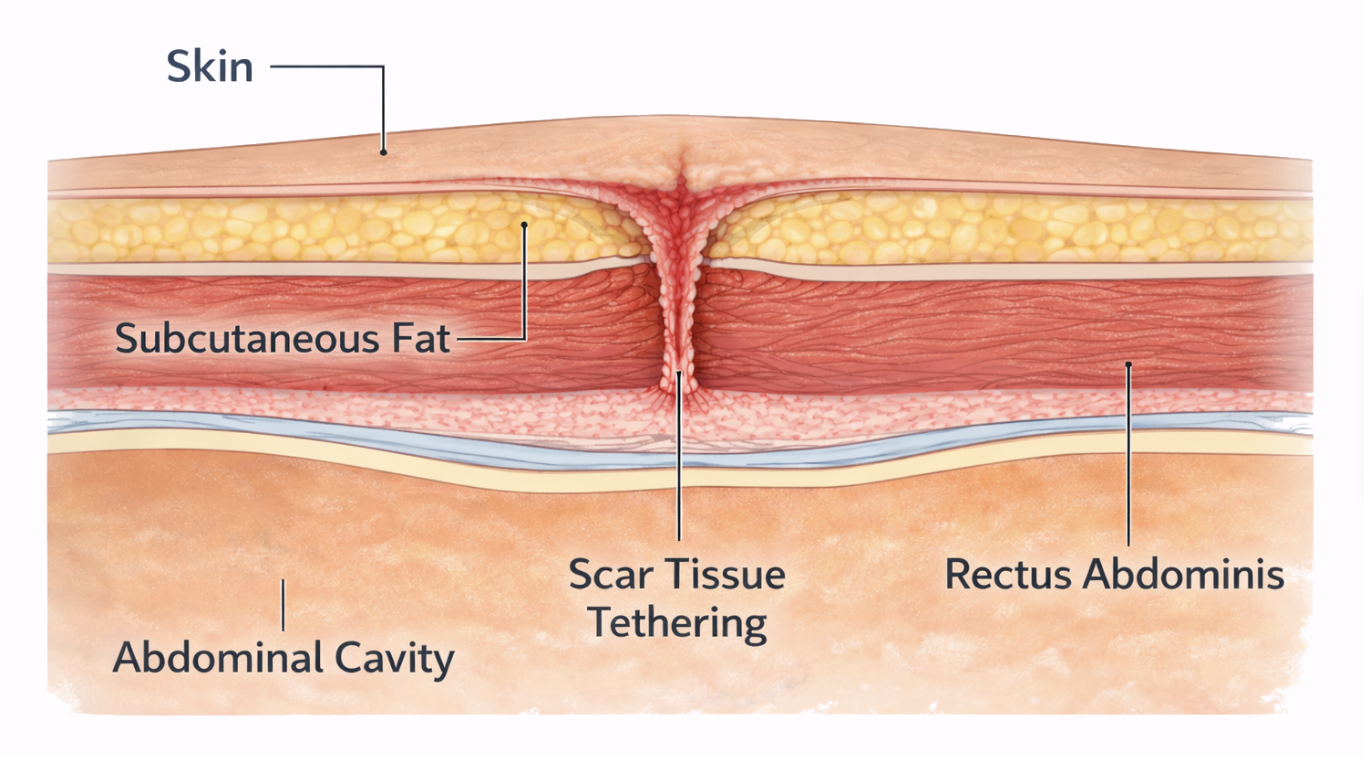
Image: Scar tissue tethering to deeper layers, contributing to the characteristic "shelf" appearance above the scar. Source: Dr Varun Harish (drvarunharish.com.au)
These consequences can include a pulling or tight sensation when you move, reduced mobility in the lower abdomen, a "shelf" or overhang of tissue above the scar line, referred pain, and changes in pelvic floor function. Research has found a direct association between C-section scar severity and increased pelvic floor muscle tone in postpartum individuals, which can contribute to pelvic pain, bladder symptoms, and discomfort during intercourse.
What does physiotherapy-led scar management involve?
The good news is that scar tissue is responsive. With the right techniques, applied at the right time, it is possible to significantly improve the pliability, sensitivity, and function of a C-section scar.
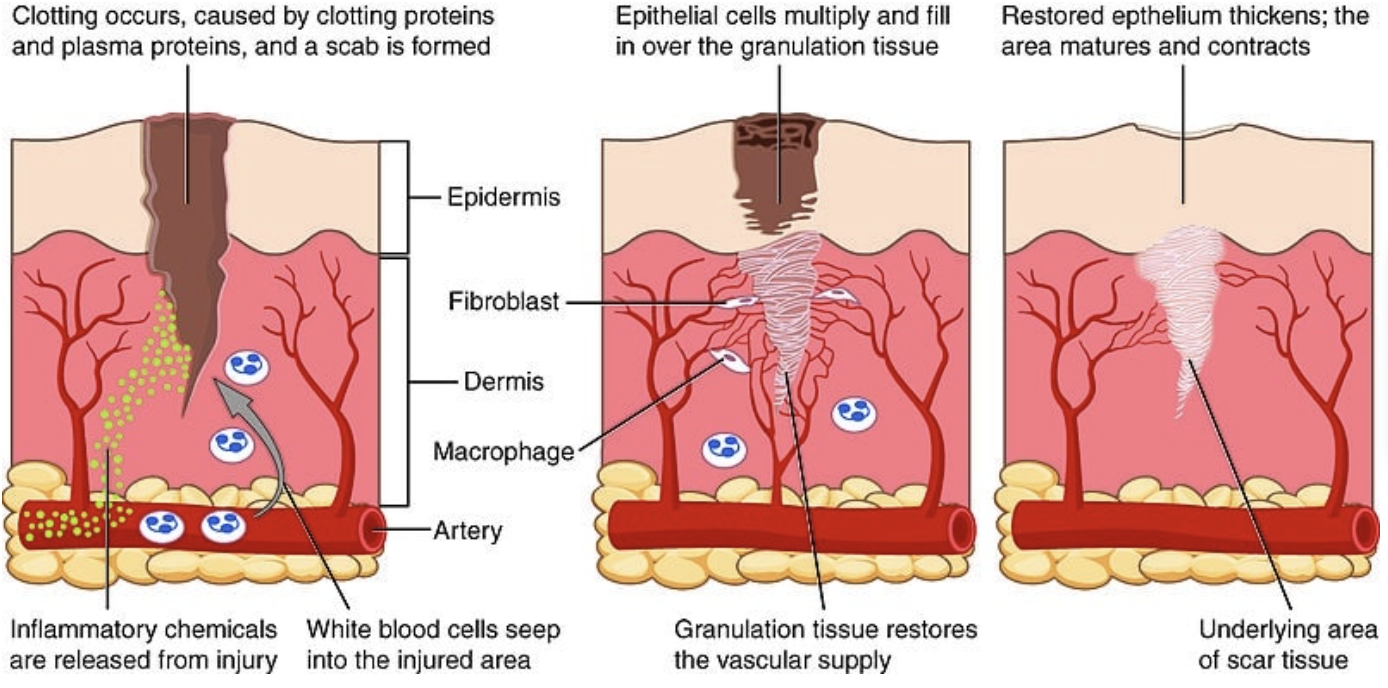
Image: C-section scar management as part of pelvic floor physiotherapy. Source: Pelvic Health and Rehabilitation Center (pelvicpainrehab.com)
A physiotherapist who specialises in postnatal and pelvic health will typically begin with a thorough assessment of the scar and the surrounding tissues, including the abdominal muscles and pelvic floor. This is not just about the scar itself; it is about understanding how the scar is affecting the whole system.
Scar mobilisation is a hands-on technique that involves gently moving the scar tissue in different directions to assess and improve its mobility relative to the layers beneath it. Clinical evidence supports soft tissue mobilisation as effective in reducing chronic pain following Caesarean section and improving the viscoelastic properties of the scar tissue.
Mobilisation typically begins around the 6-week mark, once the incision is fully healed and you have been medically cleared. In the early weeks, gentle desensitisation work around the scar (not on it) can help begin to normalise sensation in the area.
For those who find it difficult to engage with the scar directly, whether due to sensitivity, numbness, or emotional barriers, a physiotherapist can guide this process at a pace that feels manageable. There is no expectation to rush.
The role of silicone scar therapy
Alongside manual therapy, silicone-based scar treatment is considered the gold standard in international scar management guidelines
Understanding how it works helps explain why it is recommended so widely.
A healing scar loses moisture at a significantly higher rate than the surrounding skin. The body responds to this by sending additional healing signals to the area, which can lead to excessive collagen production. This is what causes scars to become raised, thickened, red, or itchy.
Silicone works by forming a semi-occlusive barrier over the scar. This reduces moisture loss, which in turn reduces the body's drive to overproduce collagen. The result, over consistent use, is a scar that becomes flatter, softer, less red, and more comfortable.
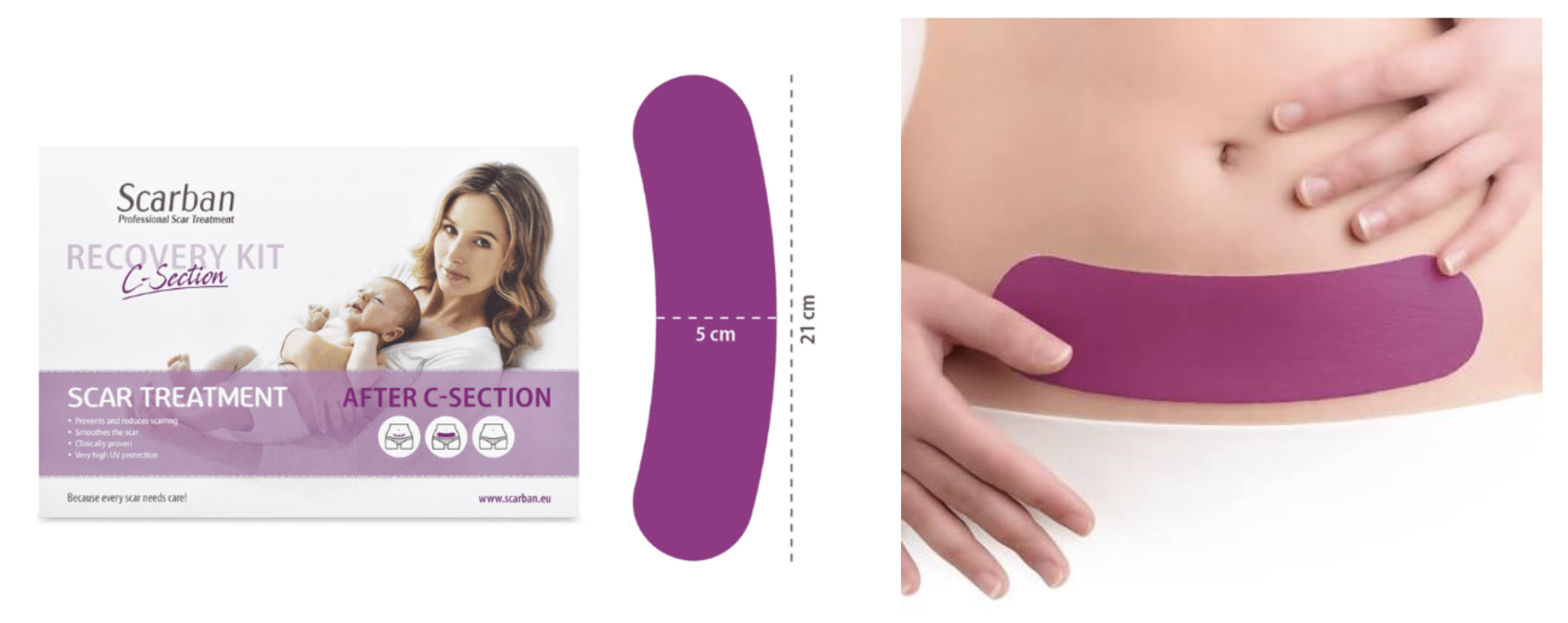
Scarban is a medical-grade silicone scar sheet specifically pre-shaped for C-section scars. It is self-adhesive, washable, and reusable, and provides UPF 50 UV protection, which is important because sun exposure can darken new scar tissue. It can be used on both new and older scars.
Silicone therapy is generally recommended to begin once the wound is fully closed and free of any scabbing, typically around 6-8 weeks post-surgery. The recommended duration of use is a minimum of three months for meaningful results
Scarban C-section silicone sheets are available at our clinic as part of a physiotherapy-led scar management plan, where clinically appropriate.
A note on the emotional side
Scar management is not only a physical process. For some, the C-section scar carries the weight of a birth experience that did not go as planned, or feelings of loss, shock, or disconnection from the body. These responses are valid and recognised.
Our team is here to support the whole picture. If you find that your relationship with your scar is complicated, that is something we can work with gently, at your pace, and in collaboration with the psychological support available through our allied health network.
When to seek support
You do not need to be in significant pain to benefit from scar management. If any of the following apply to you, it may be worth speaking to a physiotherapist:
Your scar feels tight, numb, or hypersensitive
You notice a pulling sensation when you move, exercise, or stand upright
You are experiencing pelvic floor symptoms such as leaking, urgency, pelvic pain or painful sex.
You have a visible "shelf" or overhang above the scar line
You have not received any guidance on scar care following your birth
References
[2] TrialQuest. "Layers Cut or Entered During C-Section."
[6] Monstrey, S. et al. "Updated scar management practical guidelines: non-invasive and invasive measures." Journal of Plastic, Reconstructive & Aesthetic Surgery (2014 ) 67: 1017–1025.
[7] Scarban EU. "How Scarban Works."
[8] Scarban EU. "Instruction for Use: Silicone Sheets."
